- The site about trombone playing!

As far as I know, this is the first edition of Bach´s Cello Suites IN ALL KEYS! Now you can get Suite no 1 and Suite no 2 edited for brass in all keys, available in PDF format. With 120-152 pages each, there should be enough music to keep you busy for the rest of the week…and the next few years!

There are two versions available of each suite: high brass (treble clef) and low brass (bass clef). Since all keys are represented, it doesn´t matter how your instrument is tuned, there will always be plenty of well suited etudes for your instrument – trumpet, trombone, euphonium, tenor horn, alto horn, french horn or tuba. read more »

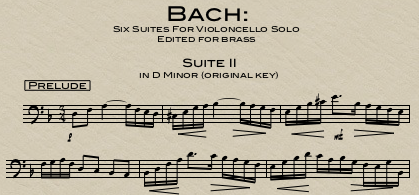
Have you ever tried to play Bach´s Cello Suites on trombone? Chances are great that you have, they sound fantastic and are quite well suited for trombone.

I use them a lot; for legato playing, intonation, building up chops and especially for pure pleasure! As a jazz player, my goal is not to make concert hall versions, and be 100% true to the original. I try to catch the flow good cello players have when they play the etudes, but otherwise, I just try to make them sound good on my horn. If they are new to you, find the download link at the end of this page, and enjoy Bach´s maybe most famous suite, no. 2 in D minor. read more »

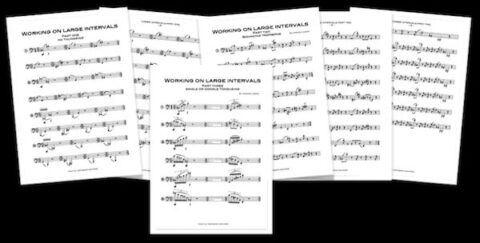
It was supposed to be a simple little exercise, didn´t expect it to end up covering nine pages of sheet music!

This is an exercise about the different types of triads and their inversions. Triads are a fundamental part of western music, both classical, jazz and pop/rock etc. You don´t need a bachelor in triadism to spot the difference between major and minor, but when you include the different inversion, mix minor, major, augmented and diminished it can be a bit more tricky to tell them apart. read more »

Nothing fancy here, just a great warm up exercise that I use on a (almost) daily basis. It´s a good combination of legato and staccato and starts in a relaxed range and goes down. Deep down! Try not to give up half way in order to get the most out of it. read more »

Both classical and jazz players benefit from a good at natural legato. It´s a fundamental part of trombone playing, and helps you accomplish smooth and light legato phrasing.

You can actually play these patterns as natural legato all the way, only tongueing the first note. read more »