Improve your trombone playing
Warmups
Flexibility
Scales
Classical etudes
Jazz etudes
Jazz patterns
Technical exercises
Trombone concertos
FREE TROMBONE EMAIL COURSE – sign up now 
I want to make your trombone playing fun and rewarding!
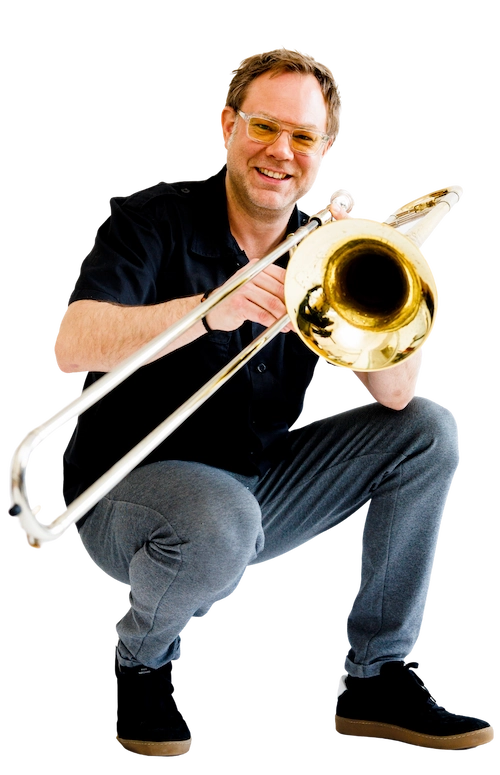
Anders Larson, trombone player and founder
Welcome to the largest collection of trombone exercises and sheet music online.
I guarantee you hundreds of hours of inspired trombone practicing—access loads of high-quality trombone material that you won’t find anywhere else.
Take the free trial and get rid of bad chops.
Improve your trombone playing
Sign up for the newsletter and get a FREE 10-day trombone course with my best tips and lots of free sheet music.
If it doesn’t improve your trombone playing, I’ll drink a bottle of Slide-o-mix!

“Wow!! This is a fantastic idea! It is clear, concise even though it covers an amazing variety of topics and ideas of interest to every trombonist at any level. Congratulations on this great work! You inspire me to go practice right now!”
Alex Iles
LA studio trombonist, member of the Hollywood Bowl Orchestra, Schilke & Greenhoe performing artist
“Trombonists who subscribe to this will have tons of great information on how to improve their musicianship, improvising, and performance skills. Well done!”
Al Kay
Yamaha signature artist, Rob McConnell Big Band & Head Of Brass at Humber College, Toronto
“A wonderful mixture of classical- and jazz-related material to improve your trombone skills. Lots of sheet music examples to play but what I really like, is the very clear and easy-to-understand way, Anders explains how to work with the material. This is a very interesting website that will benefit your playing for sure!”
Ben van Dijk
Solo bass trombonist in Rotterdam Philharmonic, Professor at the Conservatory of Amsterdam, President of the International Trombone Association (2017-2020)
Pages of sheet music
Trombone exercises published
Notes played
Cups of coffee consumed
From only $4.99 per month
14 days free trial
As a member you get full access to all content. New trombone exercises and sheet music are added regularly.
If you cancel during your free trial, you will not be charged.
Fasten your sheet belt, lubricate that slide, turn on your mouthpiece and hit that bell!
Weekly free exercises for trombone players
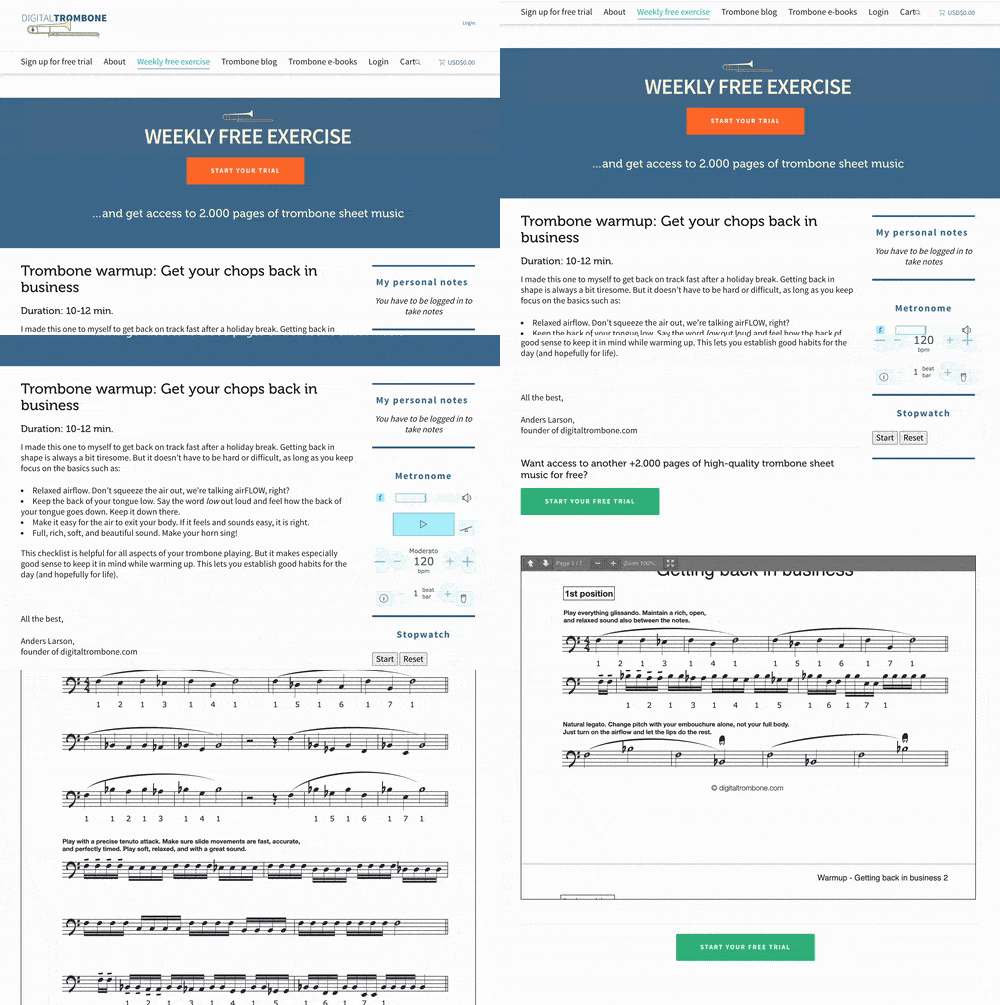
Get a glimpse of what you will find inside!
Logged-in users can highlight their favorite exercises and make personal comments.
Print the sheet music if you prefer paper on a music stand.
Set the metronome and start playing! 
How DigitalTrombone helps your trombone practicing

Print and download the sheet music
Do you prefer reading sheet music on paper on a music stand? No problem! You can easily print and download the trombone exercises – it can be more pelasing for the eye to look at an actual piece of paper.
If you like the convenience of a screen and a digital music library, you can download the sheet music and put it into your preferred pdf music reader such as forScore or MusicReader.
This site is COVID19 safe
All content was disinfected before uploading
About the author
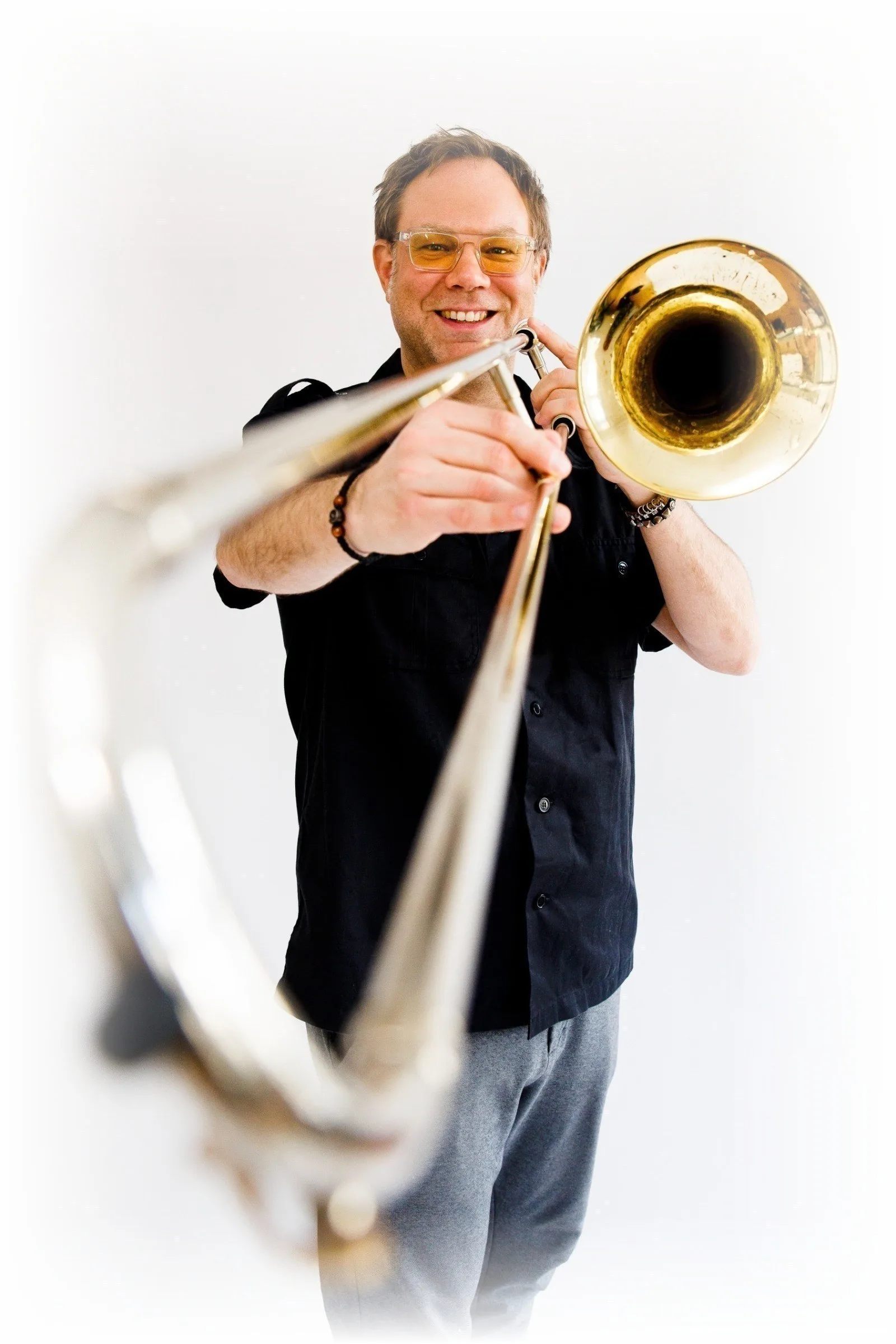
My name is Anders Larson and I am a jazz trombone player based in Copenhagen, Denmark with 25 years of experience as a professional musician and educator. I have worked with artists and orchestras such as Kim Wilde, Katie Melua, Westlife, Dee Dee Bridgewater, Ivan Lins, Curtis Stigers, Gerard Presencer, the Danish Radio Big Band, Norrbotten Big Band, Ernie Wilkins Almost Big Band, and many others. I also work extensively as an arranger and conductor, my portfolio includes work for Mike Stern & DR Big Band.
I have released 4 albums, the most recent being “New York Tribute” with my band Elektrojazz.
As an educator, I have conducted trombone workshops as well as taught on all levels from beginners to professional trombone players at music schools, music conservatories, and private students.
Besides playing and teaching, I have written tons of material for trombone – etudes, technical exercises, flexibility stuff, scale patterns, and much more. When I realized that I had created far more than 1.000 pages of sheet music for trombone for personal use and for my students, I decided that it was about time to give more people the opportunity to use it. Some of the material that has been available in my (from a trombone perspective) best-selling e-books has now been updated and is available in the member’s section of this site.
I hope that you will sign up for the free trial on a DigitalTrombone membership. You have nothing to lose – except for bad chops!
See you on board!
Anders Larson, founder, and happy trombone player
Improve your trombone playing today
– what you will learn about in the member’s section
Trombone warmup
Make sure to start every day of trombone playing with a great sound! Get the airflow free flowing and make sure your embouchure is responsive. Also make sure you play in tune on all 7 trombone slide positions in both in the high, medium and low range.
There are multiple warmups to choose between in this section. Find the ones that work for you. Somedays you are good to go after a 5-minute trombone warmup, other days it takes longer.
Flexibility is a basic and important trombone skill. Since we play multiple notes in each slide position, we need to be able to rapidly go from low range to high range and vice versa. And We need to do this with as small embouchure changes as possible.
Smooth, fast and effortless flexibility will improve all aspects of your trombone playing. In this part of the member’s section, there are tons of exercises to choose between. Yes, practicing trombone flexibility can be fun!
Trombone flexibility
Playing scales on
the trombone
Think of each scale as a language you want to master. Being able not only to speak without an accent, but also being able to use it for meaningful conversations and expressing your ideas.
This is how I believe you should consider playing scales on your trombone. Just playing a major scale from root to root is not what it is about. Being able to play with the notes and make music with them regardless if you are improvising or playing sheet music. This section has tons of exercises that will enable you to achieve this when you play trombone.
Pentatonic scales has a recognizable sound, are extremely versatile, and almost regardless of the key, they are very playable on the trombone. As an improviser it is crucial to know your pentatonic scales – and they are way more useful than you think, far beyond simple funk and blues.
This is how I believe you should consider playing scales on your trombone. Just playing a major scale from root to root is not what it is about. Being able to play with the notes and make music with them regardless if you are improvising or playing sheet music. This section has tons of exercises that will enable you to achieve this when you play trombone.
Pentatonic scales
Triads on the trombone
Don’t just play all triads on your horn. Know them by heart, sing them in all inversions and make sure to be able to intonate them perfectly. Can you without hesitating tell what note you are playing in a triad in a trombone trio? And do you know how to intonate a major third properly?
This section has tons of creative triad exercises for trombone and other bass clef instruments. I promise they will improve your game!
Playing trombone is all about playing music. Etudes are a great way to work on phrasing, intonation, legato and much more while playing music.
In this section you will find hundreds of pages of beautiful and challenging trombone etudes by composers such as Ferdinand David and Rimsky-Korsakov. You will also find orchestral studies. Challenge yourself with Telemann’s Fantasias for Flute edited for trombone or Bach’s cello suites in all keys.
Trombone etudes
Trombone jazz etudes
Are you an jazz improviser? Or do you want to try it out? There are currently over 30 jazz etudes available, all written over the chords of famous jazz standards. Each etude starts off easy and gradually get more challening.
Try playing inspiring trombone solos with play-along tracks over tunes such as Body And Soul, Summertime, Donna Lee and How Insensitiv. play them alone, with play-along tracks or with a rhythm section.
The jazz patterns in the member’s section will help you improve your trombone playing and extend your jazz vocabulary. Can you transpose a II-V-I lick to any key? And have you explored the vaste possibilities hidden within the altered scale?
Learn to master arpeggios based on jazz chords and show those try-hard sax players that 8-tone licks sound WAY better on the trombone 
Jazz patterns
>
Doodle tonguing and trombone articulation
Since the trombone doesn’t have valves, having good articulation is fundamental. As trombone players, we need to master the skill of tongued legato playing as well as perfecting staccato playing.
In my opinion, doodle tonguing is the best articulation technique for jazz trombone players. It takes some time to learn and master, but is well worth it. The member’s section has loads of doodling exercises. Here are seven steps to getting started with doodle tonguing.
Not a trombone player?
All sheet music is written in bass clef, and if you are willing to filter some trombone lingo out, you will find lots of content suitable for both electric and acoustic bass.
Tuba player? You might want to transpose most of the sheet music down an octave, but the trombone-specific instructions translate well to tubaish. Euphonium? No problem!