Flexibility exercises are very fundamental for brass players. They help you develop your range, legato playing and general control over the instrument.
Avoiding the notes “in between”
These exercises are made specifically to work on larger intervals while avoiding the notes in the gap between. You should aim for perfection and not speed when you work on these exercises.
Find a tempo that enable you to play all the notes with full sound an good pitch without stumbling over the “avoid notes”. For example, if you want to make an octave leap up from a low Bb, you should make sure not to touch the F in between. The smaller notes in some of the exercises are optional, only play them when the tempo allows you to do it in one breath with good control.
I use these flexibility exercises regularly, and find them very rewarding. Especially playing in a low range as well as high range in the same breath without changing the embouchure to much is very healthy.
If you find some of the exercises to challenging – just skip it! It´s better to focus on the ones you can play well and include the others as you improve your playing!
The smaller notes are optional, make sure that you play the exercise well rather than playing the long version.
Exercise 18 and 19 are to be considered as very advanced. I can´t play them myself unless I´m in pretty good shape… But if you are up for the challenge – please be my guest!
Good luck, and enjoy!
Sheet music, in bass clef (C) and treble clef for Bb-instruments
[nggallery id=1]
__________________________________________________________________________________
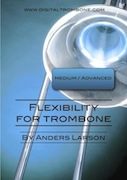
You will find this exercise and many others in the book Flexibility for Trombone – 38 pages in print friendly pdf format.
__________________________________________________________________________________
Do you like this exercise? Please leave a comment!
And don´t forget to claim your free jazz etude – sign up for the newsletter!