- The site about trombone playing!


How to improve your trombone playing with 5 minutes of theory (and a lot more practice…)
or
The only way to get to the next level of brass playing
or
Get that music-school-trombone-sound out of my life!!!
or
The truth about one of the worst and most common bad habits among brass players

Are you convinced that you continue reading this? Good, then let us get down to business! This post is about attack and tonguing for trombone players and ALL other brass players. This post is about how to discover one of the most common bad habits among brass players – and more important – how to get rid of it. read more »

Monday morning in the practice room? This is a great little exercise to get the chops going when you first pick up your horn that day. The key to all brass playing is in the air flow, and the key to a good air flow can often be found by working on a full, overtone rich sound in the medium to medium low range.

In this exercisee, I focus on F (below key hole-C) an augmented fourth down to B.* Many players have a hard time getting this register to sound as good as the rest of the middle range. One of the reasons is that the sound waves of the fifth in any given slide position doesn´t fit the instrument as goods as the fundamental on the same position (for example F versus Bb on 1st position). read more »

Practicing low range with a small mouthpiece
If you are working on the low range, consider doing the exercises you work on, on a smaller mouthpiece, or even on a smaller trombone if you play on a large bore tenor or bass trombone. Why? Well, playing a smaller mouthpiece makes it even more important to have the airflow centered in order to get the full sound. Big instruments and mouthpieces tend to be more forgiving if your embouchure and/or air flow isn´t dead on. You can test yourself: play a few notes in the low mid / low range in f on your large equipment. Now do the same with a smaller mouthpiece/trombone. Can you get the full sound out of it, or does it feels like it “locks up”? Of course, a big fff low E on a small bore horn with a 12C mouthpiece wont sound that great, but in general, you read more »

Can you play a perfect crescendo in the middle/low range going from ppp to fff in one breath? This exercise is great to improve those skills!

But before you start playing the exercise in the sheet music gallery, please read the following:
The goal is not to play as strong as possible all the time! The goal is to get the feeling of opening up your throat and let the notes in ff pour out effortlessly.

The analogy of a water pouring out of a tap is a great way to visualize the air flow. Take a look at these three pictures: read more »

I know what you think: Yet another five minutes exercise that is supposed to change my life…
But no, this time you can actually settle with two or three minutes! And it really did make a big difference for me the first time I tried it, so I strongly recommend that you tried it out.

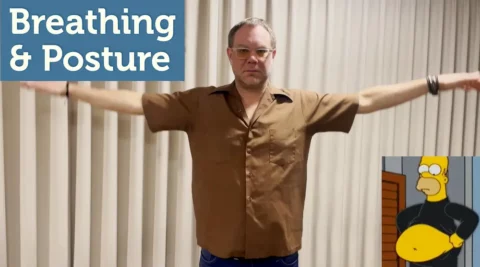
I got into some really bad problems with air flow a few years ago. After playing for years without thinking much about breathing with a natural talent for relaxed air flow I slowly got into trouble. It took me a very long time to get rid of the bad habits, both physically and mentally. This following exercise is one that really helped me. It is actually adapted from an excellent article about breathing problems (the Valsalva Maneuver) by Brad Howland.

I recommend that you stand up and make sure that you are relaxed and in good balance without your instrument. read more »

Doesn´t that sound nice, improving your playing in five minutes! Well, this exercise will not actually make you play trombone better, but it will help you get the most out of what you already know.

As I have written before, getting the airflow up and running in a relaxed manner really helps you get a good response on the horn. This small warmup and breathing exercise is all about that. read more »

Do you have the feeling sometimes that the instrument doesn´t taste as good as it use to, and that the lips just wont buzz the way you want them to? In 92,8% of the time, there is nothing wrong with the lips, and the problem is air flow, or the lack of it. read more »